Ponta Delgada
The capital of the Autonomous Region of the Azores, 65,000 inhabitants, a working Atlantic port, and the entry point for almost everyone arriving on São Miguel by air. Ponta Delgada is pleasant for a half-day walk, a useful base for the rest of the island, and not a destination in itself. This guide covers what it is worth seeing, what to skip, and how to use the city efficiently.
What Ponta Delgada is
Ponta Delgada was founded in 1499, became the capital of São Miguel in the sixteenth century, and grew through the orange-export and pineapple-cultivation periods of the eighteenth and nineteenth centuries. Today it is the political and economic capital of the Azores, the seat of the regional government, the islands' largest port for both cargo and cruise ships, and the only Azorean city large enough to call itself a city.
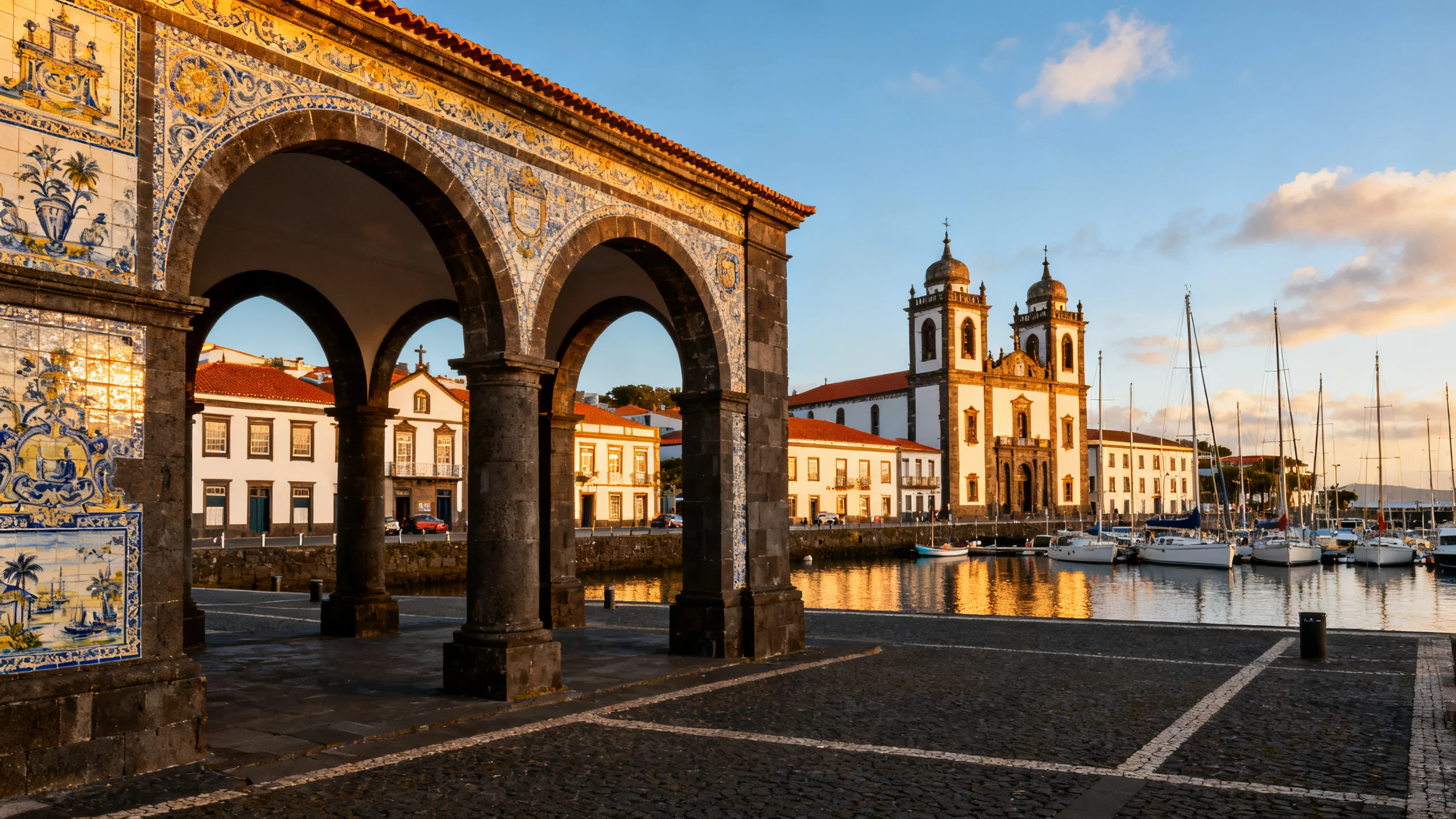
The architectural register is recognisable across the historic centre: white-painted buildings outlined in dark volcanic basalt, with carved doorways, wrought-iron balconies, and the standardised Portuguese tile facades you find from Porto to Macau. The result is a small, photogenic, and walkable old town, bracketed by a busy marina to the south and a modest commercial district to the north.
The walking circuit (about 2 hours)
The historic centre fits comfortably into a single half-day walk. Below is the standard route, in geographic order, from the marina northward.
1. Portas da Cidade
The three white-and-black stone arches at the head of the marina, originally a sea gate, now stranded inland by the modern reclamation. The most photographed landmark in the city. Five minutes here is enough; an early-morning visit avoids the cruise ship crowds.
2. Igreja Matriz de São Sebastião
The main church, just behind the Portas da Cidade. Late fifteenth-century, with a Manueline doorway and an interior of gilded woodwork. Free to enter, ten minutes inside is enough.
3. Largo da Matriz and the Câmara Municipal
The town hall square, on the same axis as the church. A working municipal building, not strictly a tourist site, but the building's bell tower and the surrounding square are pleasant. A handful of cafés along the square's edges.
4. Igreja do Colégio (Igreja de Todos os Santos)
The Jesuit church, a five-minute walk inland. The interior is the most elaborate in the city, gilded woodwork from floor to ceiling. Free entry. The adjoining building was a Jesuit college, later a seminary, and now houses the city's main municipal cultural offices and one of the better restaurants in town.
5. Convento da Esperança and the Senhor Santo Cristo image
The convent church houses the statue of Senhor Santo Cristo dos Milagres, the most venerated religious figure in the Azores. The annual Festas do Senhor Santo Cristo, held five weeks after Easter, is the largest religious festival in the archipelago. The chapel is open to visitors year-round. Free; modest dress expected.
6. Forte de São Brás (Military Museum)
Sixteenth-century coastal fort, now a small military museum. The building is the more interesting part than the displays; the ramparts offer a good view of the marina and the modern cruise terminal. Around €3 entry, 30–45 minutes inside.
7. The seafront promenade
Walk back to the marina along the seafront, a modern stretch with cafés, restaurants, and a small playground. Pleasant in the late afternoon, busy in summer.
What to skip
- Pineapple plantation tours within the city. Several plantations on the urban outskirts offer 30-minute tours. Worth it if you have a free hour and no rental car; not worth a dedicated trip across the city. The standalone pineapple wine tasting and tour is the most accessible option if you do want one.
- Generic catamaran sunset cruises. The coastline view from a small boat is not significantly different from the view from the marina at sunset. Skip unless you specifically want a boat experience.
- "Ponta Delgada full-day tour". The city centre is a 2-hour walking visit. A full-day tour means three hours of loitering before lunch and a long afternoon stretching the itinerary. Better to walk the city in a morning, leave for Sete Cidades in the afternoon.
Eating in Ponta Delgada
The restaurant scene has improved markedly in the last decade. A short, opinionated list:
- Tasca, small, perpetually busy, Azorean traditional food at moderate prices. Reservations essential.
- Restaurante Anfiteatro, at the Mercado da Graça, a small "modern Azorean" kitchen with strong seafood. Tasting menu in the €40–55 range.
- A Buca, traditional, no-frills, fish-and-meat focused. Family-run, full of locals at lunch.
- Louvre Michaelense, coffee, pastry, lunch in a tile-clad historic café. Slightly touristy but the building is worth the visit.
- Mercado da Graça, the central market, with a handful of food stalls inside. Good for a casual seafood lunch.
Practical notes
Parking: the historic centre has limited paid on-street parking and a few small underground car parks (around €1/hour). The car park at Avenida Infante D. Henrique (next to the marina) is the most reliable. Free parking is available 5–10 minutes outside the centre.
Walking distances: the entire historic centre is about 1 km north-south by 600m east-west. Everything mentioned above is within a 15-minute walk.
From the airport: €10–15 taxi, 10 minutes. Public bus (line 16) runs hourly to the city centre for €1.50.
Currency / ATMs: all standard European cards accepted. Multibanco ATMs around the marina dispense euros at standard rates. Most restaurants and shops accept contactless; small tasca restaurants may be cash only, bring €20–30 in cash for these.
Cruise ships and crowds
Ponta Delgada receives 90–120 cruise ship calls per year, mostly between April and October. On a cruise day, 1,500–3,000 extra visitors hit the historic centre between 10am and 4pm, concentrated around the Portas da Cidade and Igreja Matriz. Two strategies:
- Visit the centre before 10am or after 5pm on a cruise day.
-
Check the cruise schedule at
portosdosacores.ptand, if multiple ships are in, schedule your São Miguel day elsewhere (Sete Cidades, Furnas).
How long do you need?
Half a day, leaning short. Most travellers visit Ponta Delgada on their arrival or departure day, either on landing before driving out to the rest of the island, or before flying home. A morning walk covers everything; the afternoon is better spent elsewhere.
For a one-night Ponta Delgada stay built into a wider São Miguel trip, the city is also a viable evening destination, sunset at the marina, dinner at one of the better restaurants, late drink in the historic centre.