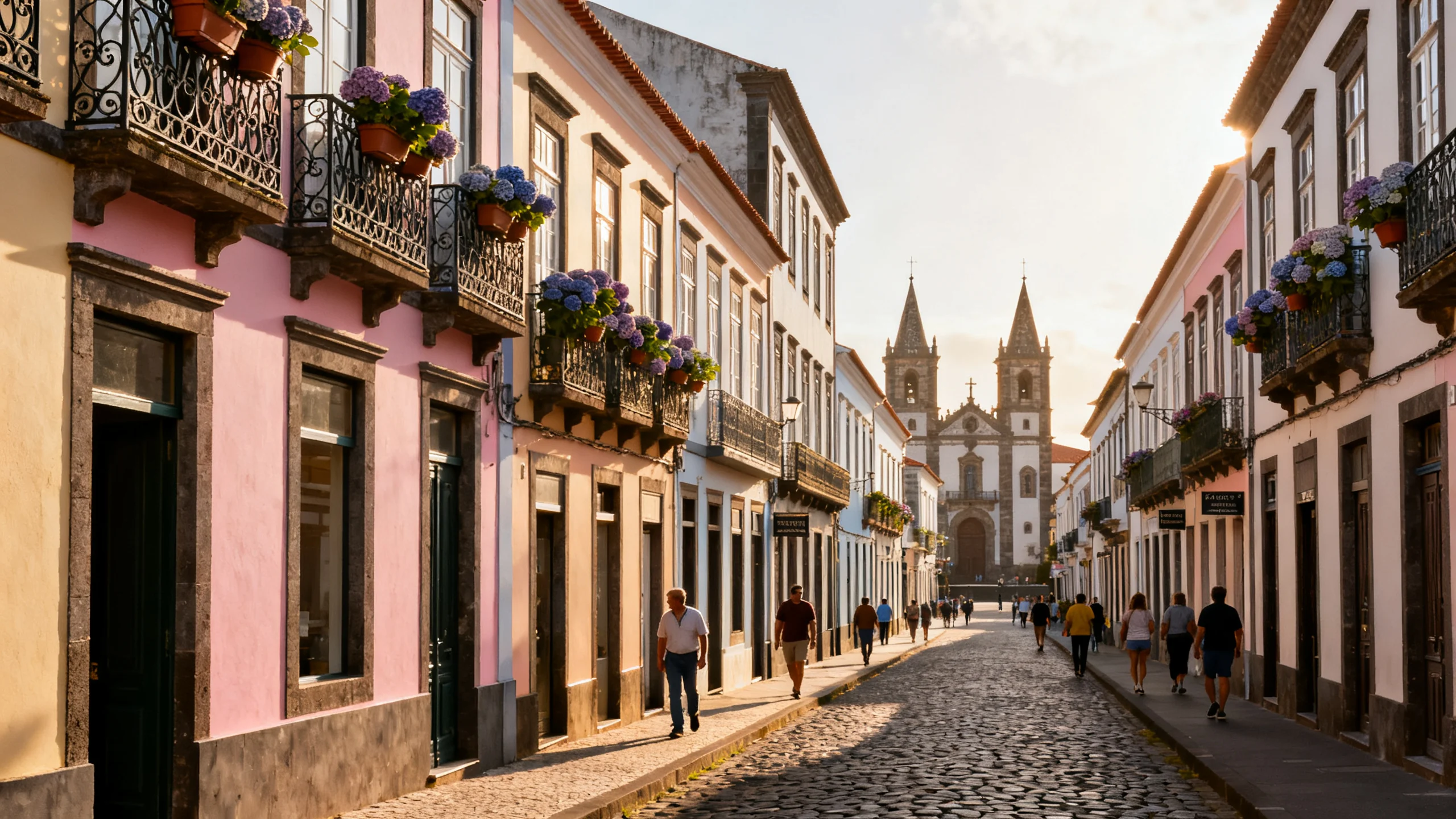
Angra do Heroísmo
UNESCO World Heritage Site since 1983. The Portuguese empire's strategic Atlantic port for two centuries, now a pastel-painted small city of 12,000 inhabitants. Walkable end to end in 20 minutes. The most distinctive small town in the Azores.
Why Angra is a UNESCO site
Angra was the obligatory mid-Atlantic stop for Portuguese sailing routes from the late 15th century. Ships from Brazil, Africa, India and the Far East all called here on the return leg to Lisbon. The military fortifications, the harbour infrastructure, and the urban grid that grew around them are preserved largely intact, making it one of the most complete 16th-century European port cities anywhere.
The 1980 earthquake damaged about a third of the buildings, but the rebuilding was meticulous and the UNESCO inscription (granted 1983) reflects both the original fabric and the quality of the restoration.
The half-day walking route
Start at Praça Velha, the main square. The town hall (Paços do Concelho) on the south side is the oldest municipal building in the Azores. The square opens onto the harbour through a triumphal arch.
Walk south down Rua Direita, the pedestrian shopping street. Pastel houses, ironwork balconies, shop windows showing local crafts, cafés on every block. The street ends at the seafront promenade.
Turn west to reach the Sé Cathedral. The current building dates from the 16th century, with a baroque interior added later. Inside: a 17th-century pipe organ, the tomb of Paulo da Gama (Vasco's brother), a small treasury of silver liturgical objects. Free entry, mornings only.
Continue to the Castelo de São Sebastião on the eastern flank of the bay, now run as a luxury pousada hotel. The 16th-century fortress walls are open to the public; the inner courtyards are reserved for hotel guests.
For the lookout view, climb Monte Brasil, the volcanic peninsula at the western end of the bay. A 20-minute walk on a steady gradient brings you to the Fanal do Pico viewpoint, with the full harbour and city laid out below. Free.
Two squares, two cafés
Praça Velha has three cafés with outdoor tables in summer. The most local-feeling is Café Boavista, on the south corner, where the morning espresso and pastry crowd is mostly residents. Open from 7am.
Largo Conde Vila Flor, two blocks west, is quieter. Café da Conde here is a good lunchtime stop with light meals and the local cheese plate.
Where to eat in Angra
Three reliable picks across price points.
- Beira Mar. A neighbourhood tasca on the seafront, fresh fish daily, around €15 to €22 per main. Closed Monday.
- O Caneta. A short drive (15 minutes) inland to the village of Altares, where the alcatra is the definitive Terceira pot roast. Lunch only, €18 to €25. Worth the drive.
- Restaurante Tasca das Tias. Modern Azorean in Angra centre, design-forward, small plates, well-curated local wine list. €30 to €45 per person.
Museums worth the time
Museu de Angra do Heroísmo at the former Convento de São Francisco. Permanent collection on Azorean history, maritime archaeology, military presence. €3 entry. Allow 90 minutes.
Forte de São João Baptista on Monte Brasil. 16th-century military fortress, partially open as a museum and partially still used by the Portuguese armed forces. Combine with the Monte Brasil walk.
What to skip
The marina shopping promenade has expanded recently with chain cafés and souvenir shops. Pleasant enough but generic; the older Rua Direita is the better walking street. Skip the harbour-side tour-bus departures unless they suit your schedule.
Time needed
A focused half-day (3 to 4 hours, including lunch) covers the main walking circuit. A full day adds the museums, the Monte Brasil climb, and a longer lunch. Two days is enough for the genuine slow-paced version with side trips to Biscoitos and the Pico Alto interior.