The Azores is one of the safest destinations in Europe. The real risks are weather, hiking exposure, ocean swimming, and one specific volcanic gas pocket. Plus what the EU health card covers.
The Azores is one of the safest destinations in Europe. Violent crime is rare, petty theft is uncommon outside the busiest squares in Ponta Delgada, and the medical system is part of Portuguese public health (which works well, especially for emergencies). The real risks for a visitor are environmental: weather, ocean, hiking exposure, and one specific volcanic-gas pocket in Furnas.
This guide covers the practical health and safety reality, what to do if something goes wrong, and the small precautions that prevent the most common problems.
What is genuinely safe
Crime. The Azores has one of the lowest crime rates in Portugal, which itself has one of the lowest in Western Europe. Walking alone at night in any town is fine. Leaving a daypack on a café chair while you order at the counter is fine. Locking the rental car at trail heads is wise (smashed windows do occur, but rarely).
Tap water. Potable on every island. Tested regularly to EU standards. Taste is good (volcanic-filtered, slightly mineral). Bottle refilling is the right move.
Food. Restaurant hygiene standards are EU-aligned. Stomach upsets from food are uncommon. Raw fish dishes (limpets, fresh tuna sashimi-style) are safely sourced; eat without anxiety.
Public transport. Buses, ferries and inter-island flights are boring-safe. The fleet is regulated and the operators are conservative about weather.
Roads. Driving is right-hand side, EU rules, well-paved on the main routes. The smaller-island roads can be narrow and winding but are not dangerous if you drive to the conditions.
What deserves real attention
1. The Atlantic Ocean
The single biggest risk is the ocean. Currents are stronger than they look, swell can build fast, and most island coastlines are cliffs or black-rock platforms rather than sandy beaches.
- Swim only at supervised or marked beaches. Praia do Pópulo, Praia das Milícias, Praia do Areal de Santa Bárbara (São Miguel) are lifeguarded in summer. Most coves and natural pools are unsupervised; check the warning flags posted at the access point.
- Respect the red flag even when the surface looks calm. The rip currents along the Azorean coast are strong.
- The natural lagoon pools (Caloura, Mosteiros) are safer than open beaches; the islet kayaking lagoons (Vila Franca, Ilhéu de Cabras) are protected from swell.
2. Hiking exposure
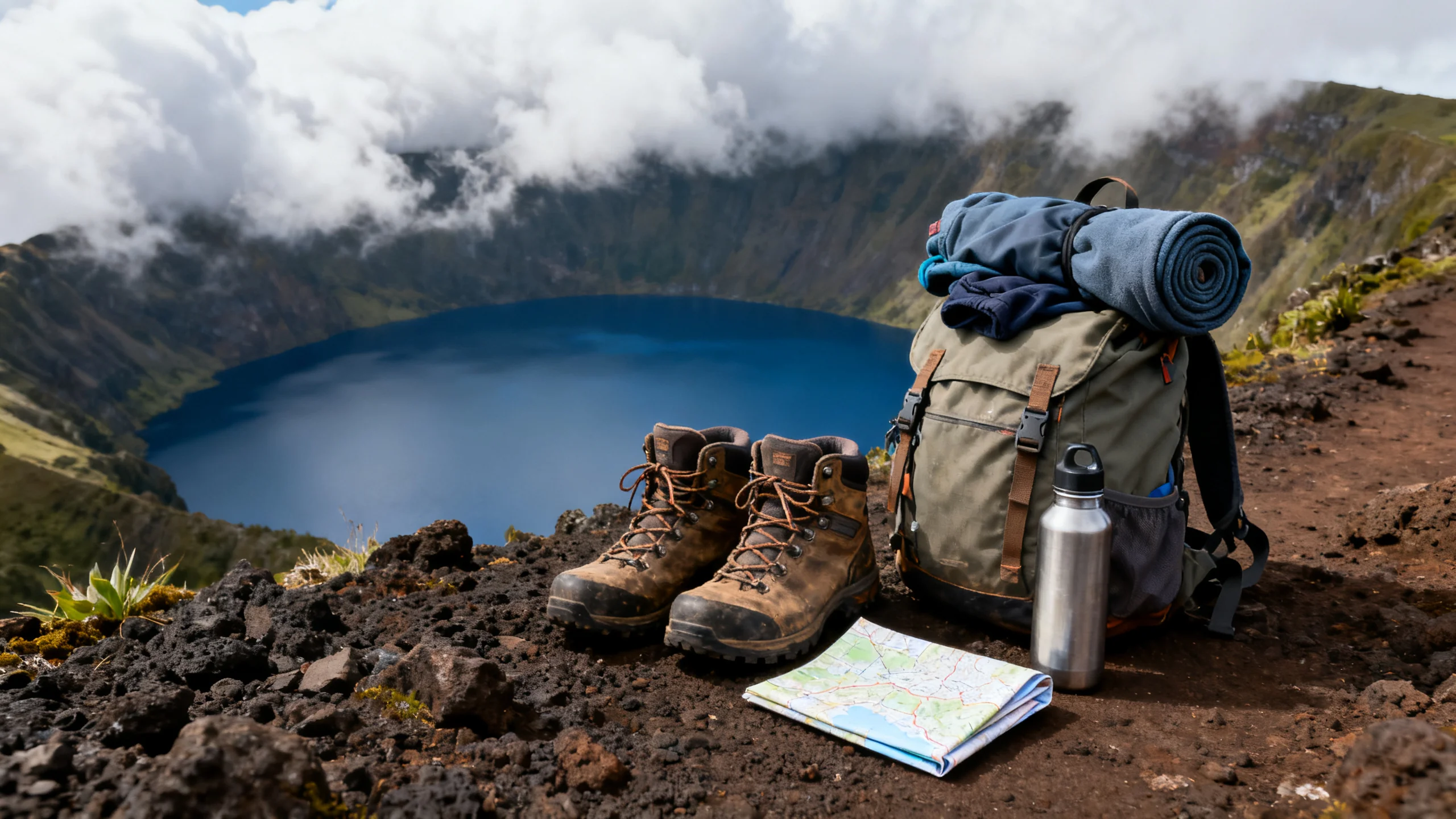
The trails on São Miguel, Pico, Faial and Flores are well-marked but many cross volcanic ridges with fast-changing weather. Cloud descends quickly. The Pico volcano (2,351 m, mandatory guide for the summit) has had several rescue incidents per year, most involving people caught by the descent in fog.
- Carry a windproof shell and food for every trail above 400 m, in every season.
- Tell someone where you are going and what time you expect to be back.
- The Pico summit requires registering with the visitor centre (Casa da Montanha) and carrying a tracker.
- Lagoa do Fogo, Caldeira do Faial, Pico volcano: always check the rim-area forecast separately from the town forecast.
3. Hot springs and thermal water
The natural hot springs (Caldeira Velha, Poça da Beija, the Caloura springs) are safe and well-managed. The fenced-off caldeiras at Furnas Lake, where the cozido pots are buried, are genuinely dangerous (90 to 100 °C boiling mud, several centimetres of soft crust over the surface). Stay behind the railings. People have been seriously burned.
4. The sun
The maritime UV is moderate to high in summer. Combined with sea- reflection and the windproof-shirt-makes-you-feel-cool effect, it catches travellers out. SPF 50 on exposed skin in summer, SPF 30 in shoulder season. Hat and sunglasses on the boat are not optional.
5. Mosquitoes and other bugs
Mosquitoes are present but not aggressive. Mostly bothersome at dusk near pools of water in summer. No tropical-disease vectors. No ticks of medical concern. Sand fleas are noticeable on the black-sand beaches in July to August.
Medical care
EU and Portuguese residents
The European Health Insurance Card (EHIC) or GHIC for UK residents gives full access to public emergency and primary care at Portuguese public clinics, on the same terms as a Portuguese resident. Bring the card and your passport.
Non-EU travellers
Travel insurance that covers medical evacuation is the practical recommendation. The Azores has good hospitals in Ponta Delgada (Hospital Divino Espírito Santo) and Angra (Hospital Santo Espírito). Serious cases are sometimes transferred to Lisbon by air ambulance, which costs €20,000+ uninsured. A €30 to €60 insurance policy is the right buffer.
Emergency numbers
| Service | Number |
|---|---|
| All emergencies (general) | 112 |
| Medical (Saúde 24) | 808 24 24 24 |
| Search and rescue at sea | 214 401 919 (MRCC) |
| Pharmacy on call | Ask at any pharmacy, posted on doors |
Pharmacies
Open 9am to 7pm typically, with a rotating on-call pharmacy overnight. Anti-nausea (Stugeron), painkillers, antihistamines, basic first aid all over-the-counter. Bring a small kit if you have specific needs; the rural pharmacies on smaller islands have a limited stock.
What to pack medically
- Personal prescription medications for the whole trip (Portugal recognises EU prescriptions; non-EU travellers should bring enough)
- Anti-nausea tablets for boat trips
- A 25-piece basic first-aid kit (plasters, antiseptic, painkillers)
- SPF 50 sunscreen
- A light insect repellent for dusk
- Any inhalers, EpiPens or specialty meds in original packaging
Frequently asked questions
Can I drink the tap water?
Yes, on all nine islands. The water is volcanically filtered through basalt and tested regularly. Taste varies slightly between catchments (the south coast of São Miguel is the softest, Pico catchments have a faint mineral edge). Reusable bottle, fill from the tap, no bottled water needed.
Are there dangerous animals?
No. The Azores has no snakes, no scorpions, no spiders of medical concern, no large mammals. The only wildlife you may notice is the occasional Atlantic seagull stealing food and the dairy cattle that own the country roads. The marine wildlife (whales, dolphins) keeps its distance unless you book a swim-with trip.
Is hiking solo safe?
Yes for the well-marked PR (Pequena Rota) trails on São Miguel, Terceira, Faial and Pico. Use the trails.visitazores.com map, tell someone your plan, carry a charged phone (network coverage is good on most trails). For the Pico volcano summit, a guide is mandatory and registration is required. The remoter Flores and Corvo trails benefit from a guide if you are not experienced.
What about scuba diving safety?
Operators on São Miguel, Terceira, Faial and Pico are PADI or SSI certified and well-equipped. The Azores has a recompression chamber in Horta (Faial) and another at the Ponta Delgada hospital. Dive sites are well-mapped and most are visitable year-round, though visibility peaks in August and September.
Are the airports safe in storms?
Yes. Operators delay or divert flights well within safety margins. If the wind is too strong for the João Paulo II Airport in PDL, flights are diverted to Lajes (Terceira) or rescheduled. The fleet and the procedures are conservative. The worst that typically happens is a 4 to 8 hour delay or an overnight diversion.