Things to do on Pico
Pico's experiences are more concentrated than São Miguel's, and most travellers fill a 3 to 5 day stay with one big activity (the volcano) plus a slow week of wine, whales, and lava walking.
1. Climb the Pico volcano
The signature activity of any Pico trip. 1,150 metres of vertical gain to the highest peak in Portugal, 7 to 9 hours round trip, mandatory guide and registration. The detailed preparation and route information is in the dedicated volcano climb guide.
2. Walk the UNESCO Lajido vineyards
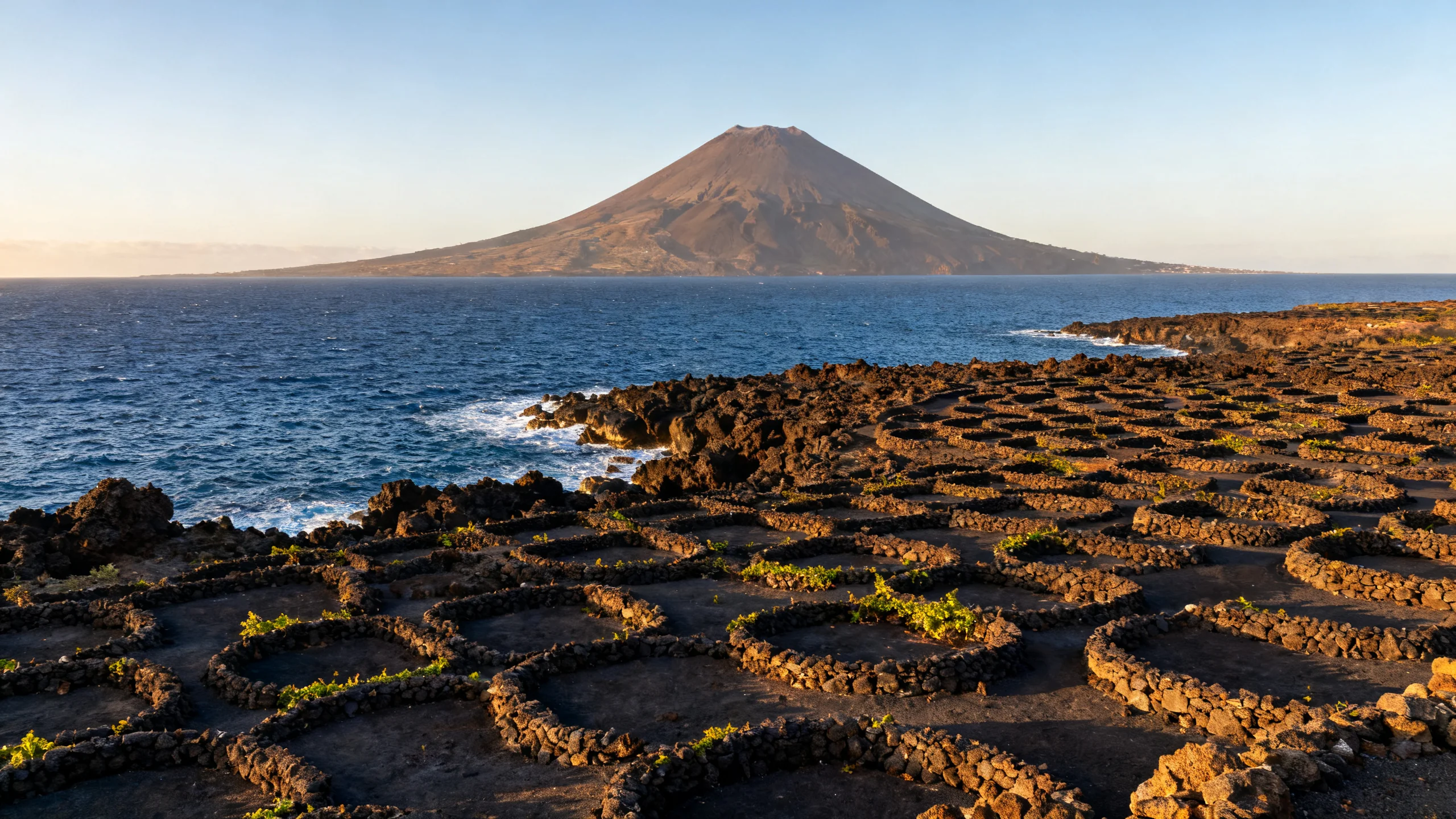
The wine landscape on the northern coast of Pico has been UNESCO World Heritage since 2004. The Lajido walking trail (PR 6 PIX) crosses the most scenic stretch of the protected area: hundreds of basalt-walled vine plots (currais), each built by hand in the 16th to 18th centuries to shelter the vines from the Atlantic wind.
The trail is 7 kilometres, flat, well-marked. Allow 2 to 3 hours. Best in spring (April to June) when the vines are leafing out, or in September during the harvest.
3. Whale and dolphin watching from Lajes
Lajes do Pico sits at the edge of a 1,000-metre coastal drop-off, the shortest run to deep water in the archipelago. The whale and dolphin watching trip from Lajes do Pico reaches sperm whale habitat in 20 minutes instead of an hour. Around €45 to €55, 3 hours, 4.8 rating.
See the whale watching guide for a comparison of Pico vs São Miguel operators.
4. Wine cooperative tasting in Madalena
The Cooperativa Vinícola da Ilha do Pico on the seafront in Madalena is the production hub for most of the island's DOP wines. Tastings €5 to €15 depending on the flight, walk-in during opening hours (9am to 6pm, Monday to Saturday).
The Frei Gigante (Verdelho), Arinto dos Açores, and Terras de Lava (a blended white) are the three to start with. See the Azorean cuisine guide for context.
5. Museu dos Baleeiros (Whaling Museum) in Lajes
The most complete record of the Azorean whaling industry that ran from the 1850s to the international moratorium in 1984. Restored wooden whaleboats, harpoons, scrimshaw (carved whale teeth), and the photographic archive of the last working years.
€4 entry, Tuesday to Sunday. Combine with a walk through the historic harbour where some of the original whaling buildings have been restored as visitor centres.
6. Furnas de Santo António lava-tube caves
A network of lava-tube caves on the central plateau, formed during the 1718 eruption when fluid basalt cooled to form crusts over still-flowing lava channels. Guided tours descend into the main tube system, around 90 minutes underground.
€15 per person, by appointment. Combine with the Lajido walk on the same north-coast day.
7. Cella Bar on the Madalena seafront
The contemporary wood-sculpted bar designed by FCC Arquitectura (opened 2014), built into the cliff at the edge of Madalena. Photogenic architecture, small plates of local cheese, octopus, and tuna paired with Pico wines. Sunset is the moment. Around €20 to €30 per person.
8. The Museu do Vinho in Madalena
The wine museum covers the 500-year history of Pico viticulture, from the 15th-century settlement plantings through the 1850s phylloxera crisis to the modern DOP recovery. Restored alembics, antique presses, the original cooperage tools.
€4 entry. Allow 60 minutes. The neighbouring small chapel (Ermida de Nossa Senhora da Lourdes) is worth a look on the way out.
9. The Pico ridge trail
For hikers who do not want the volcano climb, the central ridge trail (PR 1 PIX) crosses the eastern half of the island along a chain of smaller volcanic cones at 400 to 700 metres altitude. 17 kilometres total, can be split into half-day sections. Less spectacular than the volcano but quiet and accessible.
10. Day trip to Faial
The Madalena-Horta ferry runs 8 to 10 times daily in summer, 30 minutes crossing, €4.30 each way. A 9am departure and a 6pm return gives you a full day in Horta: the marina, the Peter Café Sport sailor bar, the Capelinhos volcano site. Functionally Pico and Faial are a twin destination, and most trips do at least one day on the other side.