Furnas
A volcanic caldera in the east of São Miguel where the ground itself is warm, the air smells faintly of sulphur, and lunch is buried in the earth for six hours before it reaches your table. Furnas is the most singular place on the island, and one of the few in Europe where active geothermal activity is something you walk through, swim in, and eat from.
What Furnas is
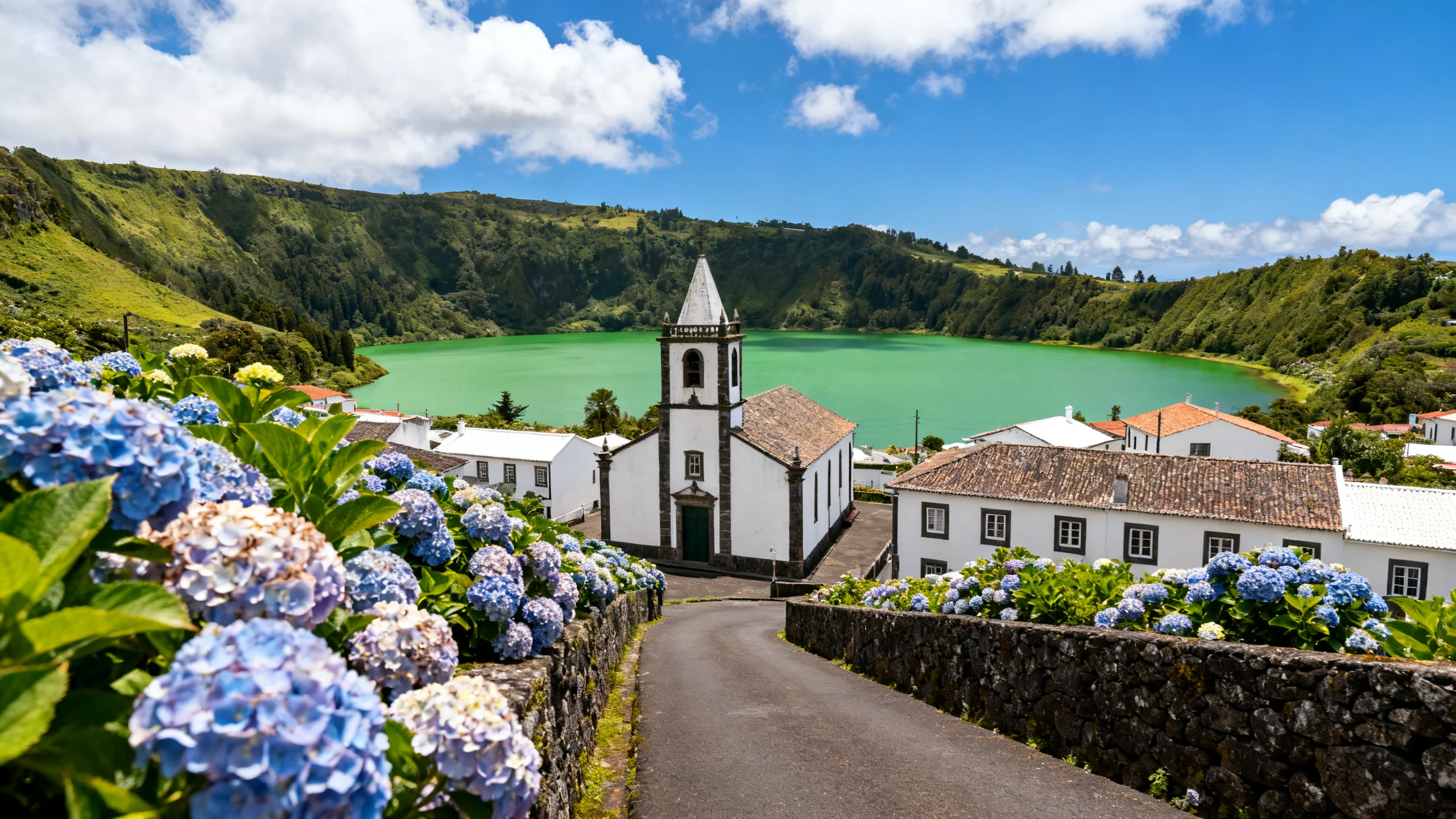
Furnas sits inside an active volcanic caldera, last erupted in 1630, still very much alive at depth. The valley floor is dotted with fumaroles (steaming vents), mud pots, hot mineral springs, and bubbling thermal pools. Two main concentrations of geothermal activity sit at either end of the valley: the Caldeiras das Furnas in the village centre, and the larger Caldeiras da Lagoa das Furnas on the shore of the valley's lake.
The village of Furnas itself (population around 1,500) is built right on top of the caldera. You can stand in the main square, smell the sulphur, and walk five minutes to the bubbling springs, which is exactly what every visitor does, usually within an hour of arriving.
Cozido das Furnas
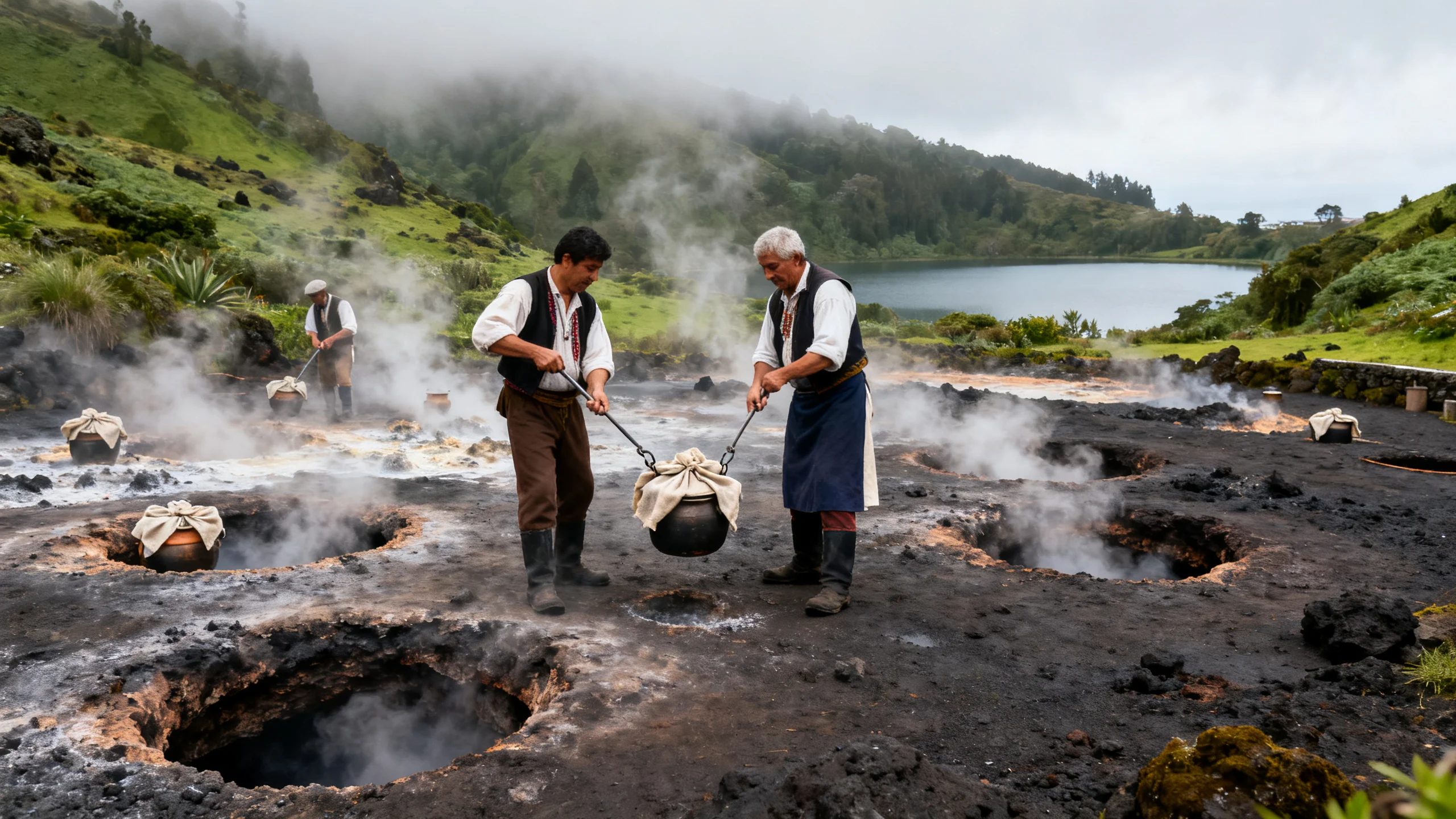
The dish that put Furnas on the map. Cozido is a traditional Portuguese stew, beef, chicken, pork, chouriço, blood sausage, cabbage, carrot, potato, sweet potato. But in Furnas it is cooked the local way: sealed in a pot, lowered three feet into a volcanic vent on the shore of the lake, and left for six hours. The heat from the ground does the rest. No fuel, no fire, no kitchen.
The pots are lowered around 5am and lifted around 11:30am, in time for lunch service at the village restaurants. You can watch the lifting, most morning tours from Ponta Delgada time their arrival for this. The ritual itself is brief and unceremonious; a man with a hook hauls each pot out of the pit, hands it to a waiting van, and drives it to whichever restaurant ordered it.
The eating is the point. Cozido das Furnas served anywhere else in the Azores is not the real thing, fuel-cooked versions exist but the slow underground heat produces a different texture, especially on the vegetables. The classic restaurants for the dish are Tony's on the village square, Casa de Pasto Furnense, and the restaurant of the Terra Nostra Garden Hotel. Book a day ahead in high season.
The thermal pools
Two famous bathing spots in or near the village:
Terra Nostra Garden, the showpiece. A century-old public-but-paying botanical garden built around an iron-rich thermal pool, 200 metres long, set in landscaped lawns. The water is rust-orange (the colour comes from the iron, which will stain light swimwear permanently, bring dark colours), warm but not hot (around 35–37 °C), and the surrounding garden has paths, smaller pools, and camellia walks worth an additional hour. Entrance fee is around €10 for non-hotel guests; the garden is part of the Terra Nostra Garden Hotel but open to day visitors.
Poça da Dona Beija, a public hot-spring complex on the edge of the village. Smaller, more communal, less manicured. Five natural pools at varying temperatures (the hottest around 39 °C), accessible day and night. Entrance is around €8. This is where locals bathe; it is busier in the evening than during the day.
Both pools are within a 10-minute walk of the village centre. Both close occasionally for cleaning.
Lagoa das Furnas
The lake just south of the village, about 2 kilometres long, fills the deeper portion of the caldera. The northern shore is where the cozido pots are buried, a row of small earth mounds, each marked with a wooden post, smoke rising from one or two of them at any given time. Visitors can walk the perimeter (about an hour), or just spend twenty minutes at the caldeiras end and move on.
Two attractions on the lake worth knowing about:
- Mata-Jardim José do Canto, a wooded landscape garden on the lake's southern shore, designed in the 1850s by the industrialist José do Canto and now restored. Camellia and rhododendron collections, a chapel, and a romantic-era boathouse. Quiet, often almost empty, around €5 to enter.
- The Nossa Senhora das Vitórias chapel, a neo-gothic chapel built by José do Canto in the 1880s, in romantic-revival style, standing alone on a peninsula in the lake. Visible from across the water, accessible by a five-minute walk. Photogenic; unrelated to the geothermal story but part of every drive around the lake.
Other things in the village
Beyond the caldeiras and the thermal pools, Furnas is small but rewarding for an afternoon. The Caldeiras das Furnas in the village centre are a five-minute walk from the main square, a fenced-off zone of bubbling mud pots and steaming fumaroles, with a small ironwork pavilion built in the 1930s. The walking circuit takes 20 minutes and you can refill a water bottle from the iron-rich spring "Água Ferrea" at one of the public fountains (it tastes strongly mineral; whether you find this pleasant is personal).
The village square (Praça 5 de Outubro) has half a dozen cafés and restaurants, mostly serving traditional Azorean food. The Sunday market is small but worth a stop if your timing aligns. Furnas also has a thermal bottling plant; you will see the bottled spring water across the island.
Guided tours from Ponta Delgada
The standard way to visit Furnas without a rental car is on a full-day guided tour. The most popular pattern combines the cozido lifting in the morning, the village, Terra Nostra in the afternoon, and one or two extra stops (Gorreana tea, the Nordeste coastline) on the way back.
The Furnas tea, lake and volcano guided tour is the standard option, a day-long itinerary covering the cozido lifting, the village, the lake, the Gorreana tea plantation, and a viewpoint over the eastern crater. Includes lunch (a cozido portion).
For an evening alternative, the Furnas night-time experience with thermal baths and dinner runs in the late afternoon, arriving in time for a sunset bath at one of the thermal pools, a dinner in the village, and a return to Ponta Delgada in the evening. Less daylight at the lake, but a different atmosphere and fewer day-tour crowds.
For a comfortable van rather than a jeep, the eco-friendly East São Miguel full-day van tour covers Furnas as part of a wider eastern-island route, with eight to ten passengers per vehicle rather than jeep capacity. Higher comfort, less off-road.
Getting there independently
By rental car: from Ponta Delgada, take the southern coastal road via Vila Franca do Campo. About 1h15 to Furnas village. Parking is straightforward, the village has free street parking, and both Terra Nostra and Poça da Dona Beija have their own car parks for bathers.
By bus: routes from Ponta Delgada reach Furnas a few times daily, with a journey time around 1h45. Reliable but infrequent, check the EVT public bus timetable in advance and plan around the limited return options.
Where to stay in Furnas
Furnas works as a one- or two-day base for travellers who want a slower pace than Ponta Delgada. The valley is quiet after the day tours leave around 5pm, and the early-morning experience of the caldeiras with the steam rising and almost no one around is worth the night.
The top-end choice is the Terra Nostra Garden Hotel, a restored 1930s spa hotel with direct access to the famous thermal pool. Rates around €180–300 per night in season. Mid-range options include the Furnas Boutique Hotel (next to Poça da Dona Beija) and several traditional guesthouses (casas rurais). A full guide on where to stay in São Miguel covers the area in more detail.
FAQ
How long do I need at Furnas?
For a single day visit including the caldeiras, a thermal bath, and lunch: half a day works, though it will feel rushed. The natural rhythm is a full day. To experience the village beyond the day-tour flow, stay overnight.
Is the smell of sulphur a problem?
Mostly atmospheric rather than overpowering. The strongest smell is right at the caldeiras, within a few metres of the bubbling springs. In the village and at the thermal pools, the smell is faint and most visitors stop noticing it after twenty minutes. People with respiratory conditions should approach the fumaroles cautiously.
What should I bring for the thermal pool?
A swimsuit in dark colours (the iron-rich water permanently stains light fabrics), a towel, and flip-flops. Both Terra Nostra and Poça da Dona Beija rent towels if you forget yours. Bring a change of clothes for after, your skin and hair will retain the mineral smell for a few hours.
Is cozido das Furnas worth eating if you don't usually like stew?
Probably yes, if only once. The interest is partly the cooking method , and the meal includes vegetables, sausages, and several meats, so even non-stew eaters find something. Portions are large; one cozido easily feeds two.