Nordeste
The Nordeste is the remote east of São Miguel, a region, not a single town. The wettest, greenest, and least visited part of the island, with the highest peak (Pico da Vara), the only nesting habitat of the Azorean bullfinch, a chain of cliff-edge viewpoints, and a tempo unmistakably slower than anywhere else on São Miguel. It is the natural place to spend the third or fourth day of a São Miguel trip, and is rewarding only if you have the time to give it.
What the Nordeste is
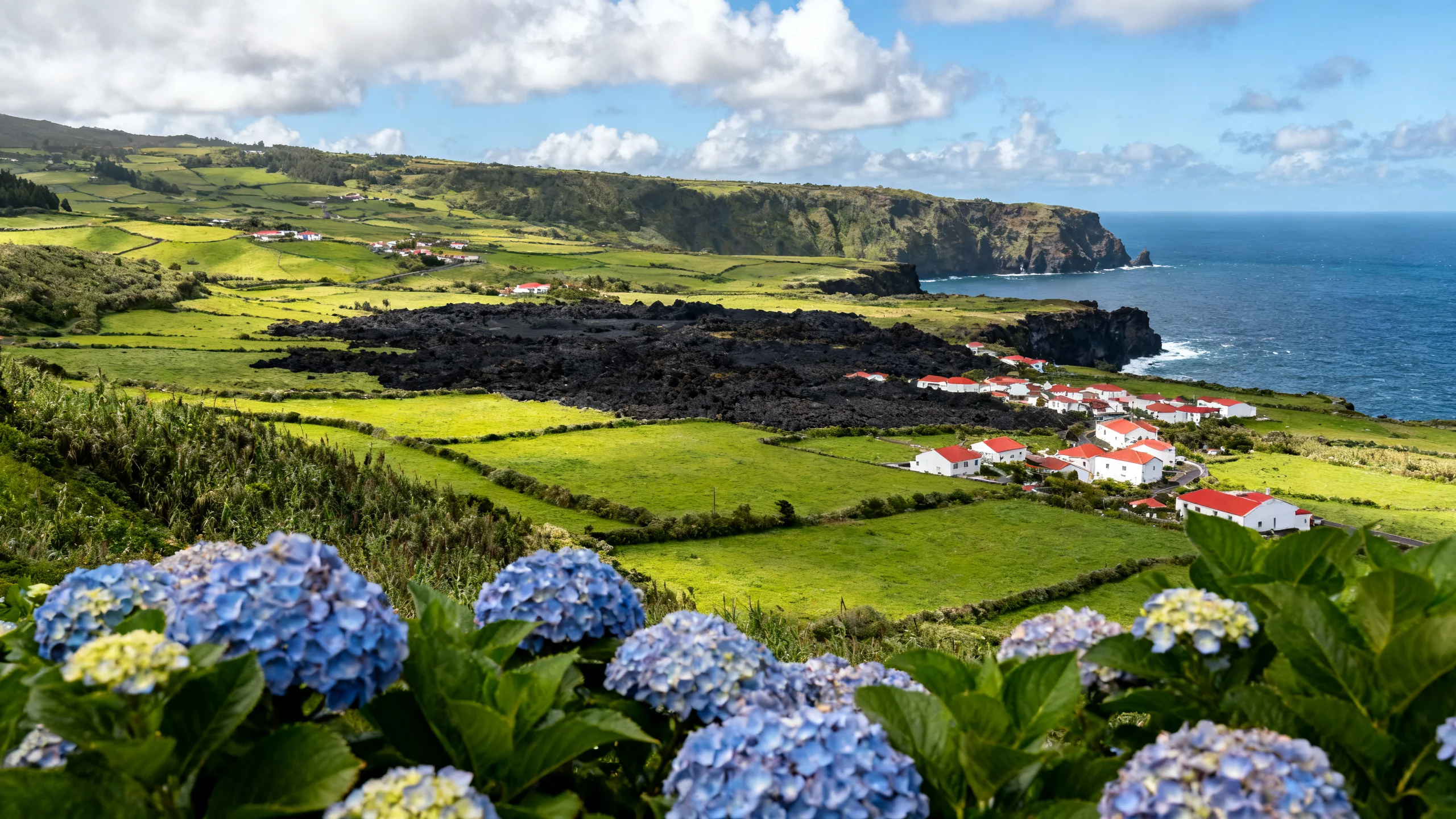
Administratively, the concelho of Nordeste is one of the six municipalities of São Miguel, covering the eastern fifth of the island, about 100 square kilometres, with a population of around 5,000. Geographically it is dominated by the Serra da Tronqueira mountain range, the laurel forest along its spine, and the steep volcanic cliffs falling toward the sea on both the north and east coasts.
Tourism here is light. Day trips from Ponta Delgada usually include a few of the most famous viewpoints and continue back; almost no one stops for more than a few hours. The result is that the small towns (Nordeste itself, Achadinha, Salga, Faial da Terra) feel like working villages rather than tourist destinations, with the accompanying advantages (real prices, real restaurants for the residents) and limitations (almost everything closes between 3pm and 7pm).
The viewpoints
The standard Nordeste circuit, driven east along the EN1-1A road, strings together a series of cliff-edge viewpoints. Most well-marked, most with parking and a path. The four most worth stopping at, in roughly the order they appear when driving from Ponta Delgada:
Miradouro de Santa Iria. One of the most striking cliff viewpoints on the island, looking westward over Ribeira Grande and the north coast. The Tea House café at the lookout is a worthwhile stop for the view alone.
Miradouro do Sossego. Translates as "the lookout of peace", a small landscaped park with rhododendrons, hydrangeas (in June and July), and a perfectly framed view of the coastal cliffs falling to a black-sand cove below. Free entry, 20 minutes for a proper visit.
Miradouro da Ponta da Madrugada. The easternmost viewpoint on the island and traditionally the first place to see the sunrise, hence "Madrugada" (dawn). Small parking area, paved promenade, panoramic view east toward the Atlantic with nothing between you and Lisbon. Worth the visit at any time of day, special if you make the dawn trip.
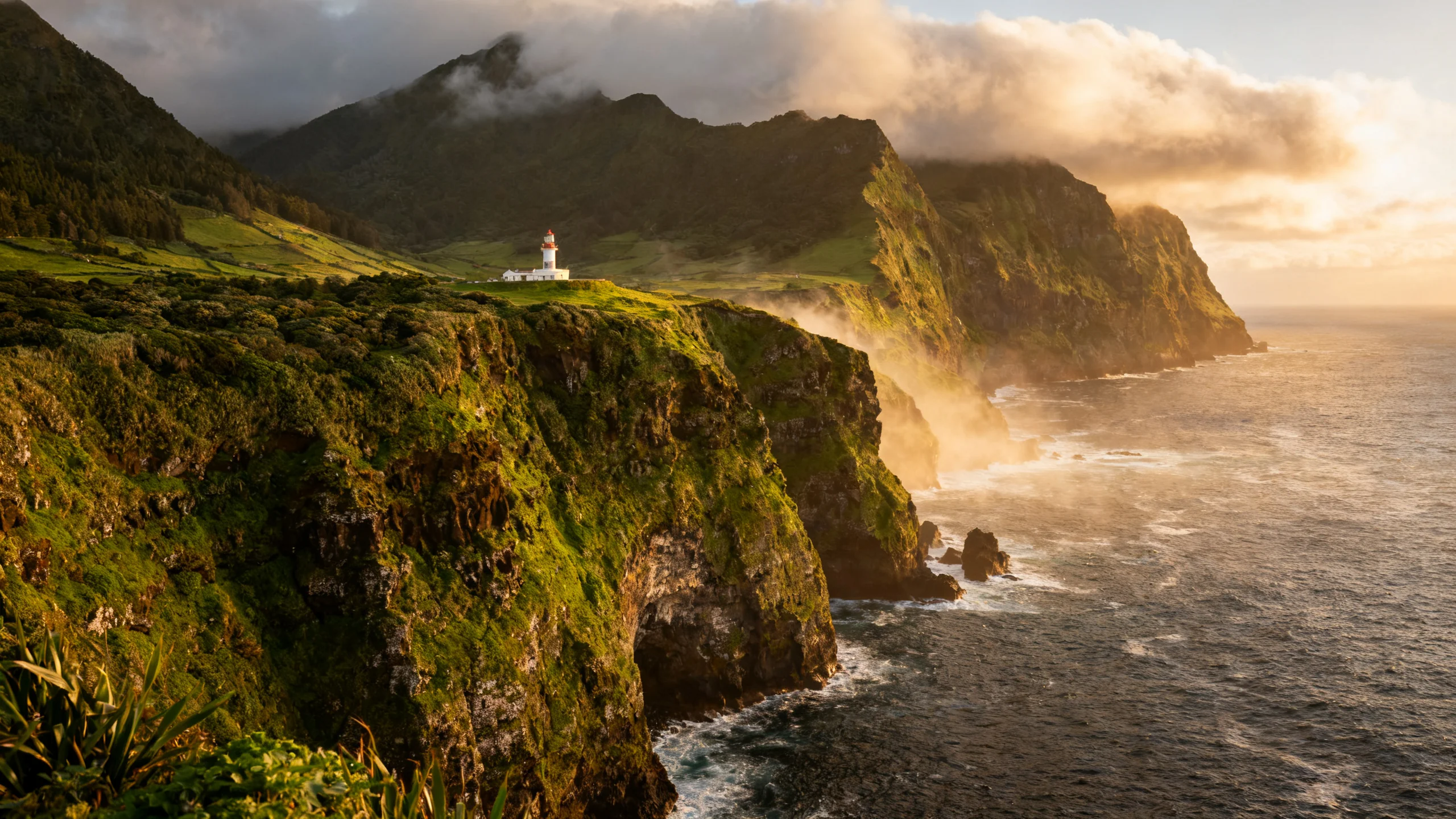
Miradouro da Ponta do Arnel. A lookout above the old Arnel lighthouse on the easternmost tip of the island. A short walking trail leads down to the lighthouse itself, about 15 minutes each way, with an 80 m elevation drop on the way down. The lighthouse area is the most isolated point on the road network.
Pico da Vara and the priolo
At 1,103 m, Pico da Vara is São Miguel's highest point and the breeding ground of the priolo (Azorean bullfinch), a critically endangered bird found nowhere else in the world. The species had dwindled to fewer than 100 pairs in the 1990s before coordinated conservation efforts began rebuilding the population. Current estimates put the population around 800 pairs.
The summit area is reachable via a 4 km trail from the EN1-2 road on the western flank of the mountain. The walk is steep, exposed on the upper sections, and the summit itself is bare. Many days the peak is in cloud, check the forecast before committing.
For wildlife enthusiasts, the lower slopes (accessible from the Centro Ambiental do Priolo near Lomba da Pedreira) host the bird more reliably than the summit. The interpretation centre runs regular guided walks for €5–10 per person; sightings of the priolo are not guaranteed but typical in May and June.
Faial da Terra and the Sanguinho walk
The small coastal village of Faial da Terra is the starting point of one of the most rewarding hikes on São Miguel, the Sanguinho-Salto-do-Prego loop. The trail climbs through laurel forest to the abandoned village of Sanguinho (a cluster of stone houses partially restored as holiday rentals), then to the Salto do Prego waterfall (with a swimming pool at the base), and descends via a parallel route. About 7 km total, 2.5 hours, well-marked, no technical sections.
Faial da Terra itself is worth 30 minutes, a working fishing village with a small harbour, a handful of cafés, and the characteristic Azorean architecture of black basalt and white plaster. Lunch options are basic but adequate.
The east coast town of Nordeste
The town of Nordeste (slightly confusingly, the name of the municipality is also the name of its main town) has about 1,200 residents. The main square is built around the Igreja Matriz de São Jorge, and a few side streets lead to small shops, the municipal market, and a couple of cafés. Most travellers stop here for lunch or coffee on the standard circuit.
The Ponte dos Sete Arcos just below the town is the most distinctive landmark, a seven-arched stone bridge in the valley, built in the early twentieth century to carry the road that connects Nordeste to the rest of the island.
The eastern coast: Ribeira do Guilherme and Pesqueiro
The least-visited stretch of coast on São Miguel runs from the Ponta da Madrugada lookout south along the eastern shore. The road skirts the coast at varying distances, dropping through small villages. Ribeira do Guilherme, Pedreira, Pesqueiro. Each has a small harbour or natural pool. None has significant tourist infrastructure; the appeal is the absence of it.
For travellers with a half-day to spare, driving this east-coast loop and stopping wherever a viewpoint appears is the way to see the part of São Miguel that does not appear on any short itinerary.
Guided tours covering the Nordeste
Most day-tours from Ponta Delgada include the Nordeste as the afternoon stop of a longer eastern-island route. The standard pattern is Furnas in the morning, Gorreana tea in the early afternoon, then a selection of Nordeste viewpoints on the way back.
The East São Miguel full-day van tour is the standard option for visitors without a rental car, covers Furnas, Gorreana, and a selection of Nordeste viewpoints in a comfortable group of 8–10, with lunch included.
For a tour built explicitly around Furnas and Gorreana with a more compressed Nordeste loop, the Furnas tea, lake and volcano guided tour is the alternative.
Driving the Nordeste yourself
With a rental car, the Nordeste opens up beyond the day-tour version. A reasonable self-drive itinerary from Ponta Delgada:
- 9:00. Depart Ponta Delgada, drive east along the north coast (via Ribeira Grande).
- 10:30. First stop at Miradouro de Santa Iria (coffee and views).
- 11:30. Miradouro do Sossego, 30 minutes for the garden walk.
- 12:30. Lunch in the town of Nordeste at one of the simple casas de pasto.
- 14:30. Miradouro da Ponta da Madrugada.
- 15:30. Miradouro da Ponta do Arnel and the lighthouse walk.
- 17:00. Start the return drive via the southern route, optionally stopping at Faial da Terra.
- 19:00. Back in Ponta Delgada.
A more committed version adds an overnight in the Nordeste itself (one of the handful of casas rurais) and gives a second day for the Pico da Vara approach or the Faial da Terra–Sanguinho hike.
Where to stay
The Nordeste has limited accommodation: a few small hotels, several rural guesthouses, and a small number of self-catering cottages in restored stone houses. Standout options:
- Furnas Lake Villas, technically in Furnas parish, but on the eastern side of the lake. Detached villas with private outdoor space.
- Casa do Cabreiro, a small rural guesthouse in the village of Cabreiro, on the road between Nordeste and Furnas.
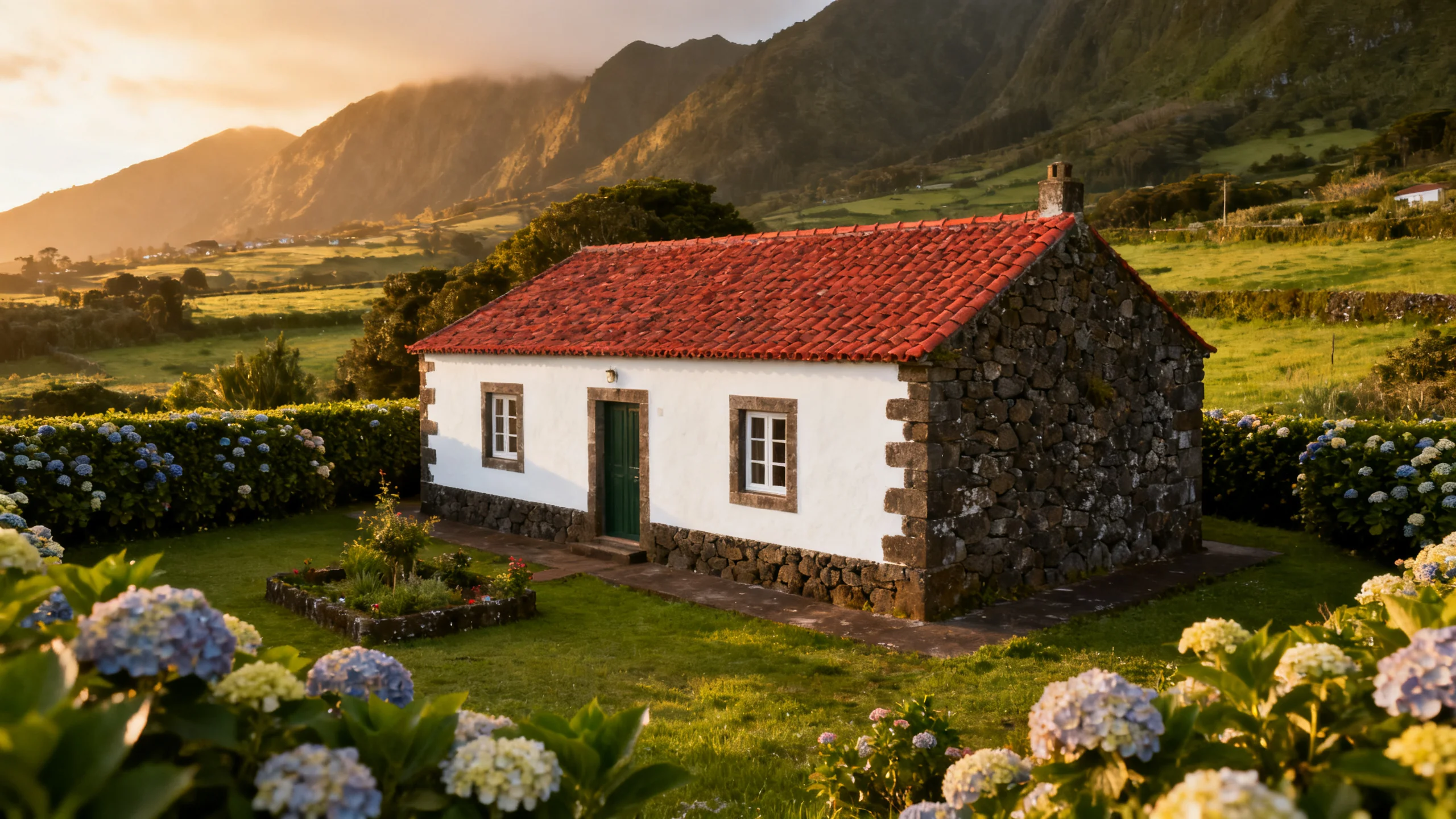
- Aldeia da Cuada-style cottages in the Nordeste area, restored stone villages, with several operating in Faial da Terra and Achadinha.
See also: where to stay in São Miguel.
Practical notes
Restaurants in the Nordeste close between lunch (12:30–14:30) and dinner (19:00–21:30), with very few exceptions. Plan around this, a 3pm arrival hungry is a problem.
Fuel: there is a single petrol station in the town of Nordeste. Fill up in Ribeira Grande before driving east, if possible.
Phone signal is good in the towns and along the main roads, patchy on the trails into the Pico da Vara area.
Drive times from Ponta Delgada: 1h to the first Nordeste viewpoint (Santa Iria), 1h30 to the town of Nordeste, 1h45 to Ponta da Madrugada.