Things to do on Terceira
Terceira packs more history per square kilometre than any other Azorean island, plus the most distinctive cultural calendar in the archipelago. This is what to do across a 3 to 5 day stay.
1. Angra do Heroísmo UNESCO old town
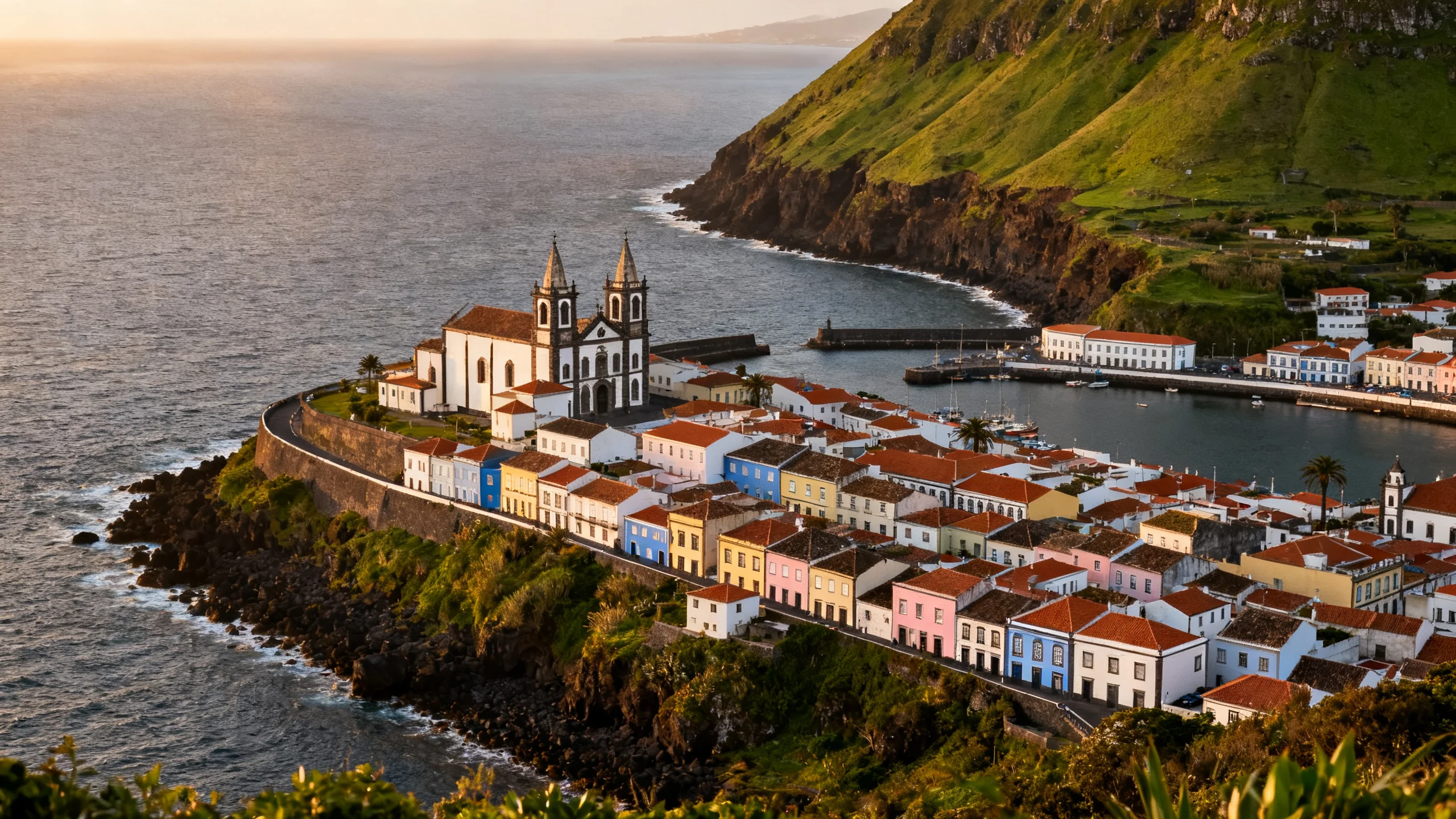
The historic centre of Angra has been a UNESCO World Heritage Site since 1983. Walkable in a half-day on foot, the highlights are the 16th-century Sé Cathedral, the Castelo de São Sebastião (now a pousada hotel), the Palácio dos Capitães-Generais on Praça Velha, and the long pedestrian Rua de São João. Allow time for a slow lunch in a tasca and a coffee on the terrace at one of the squares. See the dedicated Angra guide for a turn-by-turn walking route.
2. Algar do Carvão
A 90-metre-deep volcanic chimney in the centre of the island, descended via a metal spiral staircase from a small visitor centre on the EN3-2A road. The basalt walls are coloured by mineral staining, the underground floor holds a small clear lake, and the air stays around 14 °C year-round.
Entry €10 adults, €5 children. Open daily, 10am to 5pm. Allow 60 to 90 minutes. Combine with Furna do Enxofre (a separate sulphurous cave 2 km away) on the same ticket if you want a more complete underground tour.
3. Tourada à corda (May to October)
The bull-running festival that defines Terceira culturally. A bull is released into a village street on a long rope, six or eight rope-holders control the run, locals dodge through the streets. Held in different villages every weekend from late May to early October, typically two to three towns per Saturday. The list of dates is published yearly by the regional tourism office.
Watching is free. Best vantage points are first-floor balconies and side streets, not the main run. The locals will tell you where to stand. Ethically the touradas are controversial; the bulls are not killed but they are stressed and occasionally injured. Visitors can attend respectfully or skip on principle; both are normal responses.
4. Serra de Santa Bárbara rim trail
A 7-kilometre loop along the rim of Terceira's highest volcano (1,021 m). The trail is well-marked (PR 5 TER), with continuous views over the western half of the island when cloud cooperates. Allow 3 hours including stops. The starting point is a small parking area off the EN3-2 road, accessed by car or by pre-booked shuttle from Angra.
Best months: April to October. Inside the caldera at the bottom of the rim, a small wetland hosts endemic plants (the lilac Azorean heather that gives the island its nickname).
5. Biscoitos coastal pools and wine museum
A village on the north coast, 25 minutes' drive from Angra. Two distinct experiences: the natural pools cut into the black lava rock at the shore (free, swimmable in summer), and the Museu do Vinho dos Biscoitos, dedicated to the DOP white wines grown on the lava-walled vineyards behind the village. Tastings €5 to €10. Easily combined with the rim trail as a half-day.
6. Praia da Vitória beach
The longest natural beach in the Azores, 1.5 kilometres of golden sand on the east coast. Lifeguarded in summer, calm water sheltered by the harbour breakwater. The town behind is modern and not particularly scenic, but the beach itself is excellent for families and the warmest, sunniest spot on the island.
7. Whale and dolphin watching
The Terceira whale and dolphin watching boat tour runs from Angra harbour. Smaller boats and crowds than the São Miguel operators, similar species mix, often calmer sea on the south-Terceira side. Around €70, 3 hours, departures April to October. See the whale watching activity guide for full operator comparison.
8. Swim with wild dolphins
The Terceira swimming-with-wild-dolphins trip offers the in-water Atlantic encounter for confident open-water swimmers. Around €125, 3.5 hours. Demands genuine swimmer confidence in open ocean, see the swim with dolphins guide for fitness honest-talk.
9. The Sanjoaninas (mid-June)
The Azores' biggest summer festival, centred on Angra. Two weeks of street parades, marching bands, bullfights in the Praça de Touros, free outdoor concerts every night, food stalls in the squares. The peak weekend is typically the closest to Saint John's day (June 24). Book accommodation 4 to 6 months ahead. The city is genuinely packed but the energy is real.
10. Sé Cathedral and the religious circuit
Angra's Sé (cathedral) was built in the 16th century and rebuilt after the 1980 earthquake. Inside: a mixed Renaissance and baroque interior, two pipe organs, a small treasury. Free entry, daily morning hours. The smaller Igreja da Misericórdia and Igreja de São Gonçalo nearby complete a 90-minute religious circuit through the old town.