Things to do on Flores
Flores rewards travellers who walk and travellers who photograph. A 3 to 5 day stay covers the essentials below. Add days for the trans-island hike or a Corvo ferry trip.
1. Visit Poço da Alagoinha
The signature Flores landscape, six waterfalls cascading into a single basin. A 20-minute walk from the EN1 viewpoint. Best in May or June for full flow. See the waterfalls guide for the complete cascade circuit.
2. Drive across the seven lakes
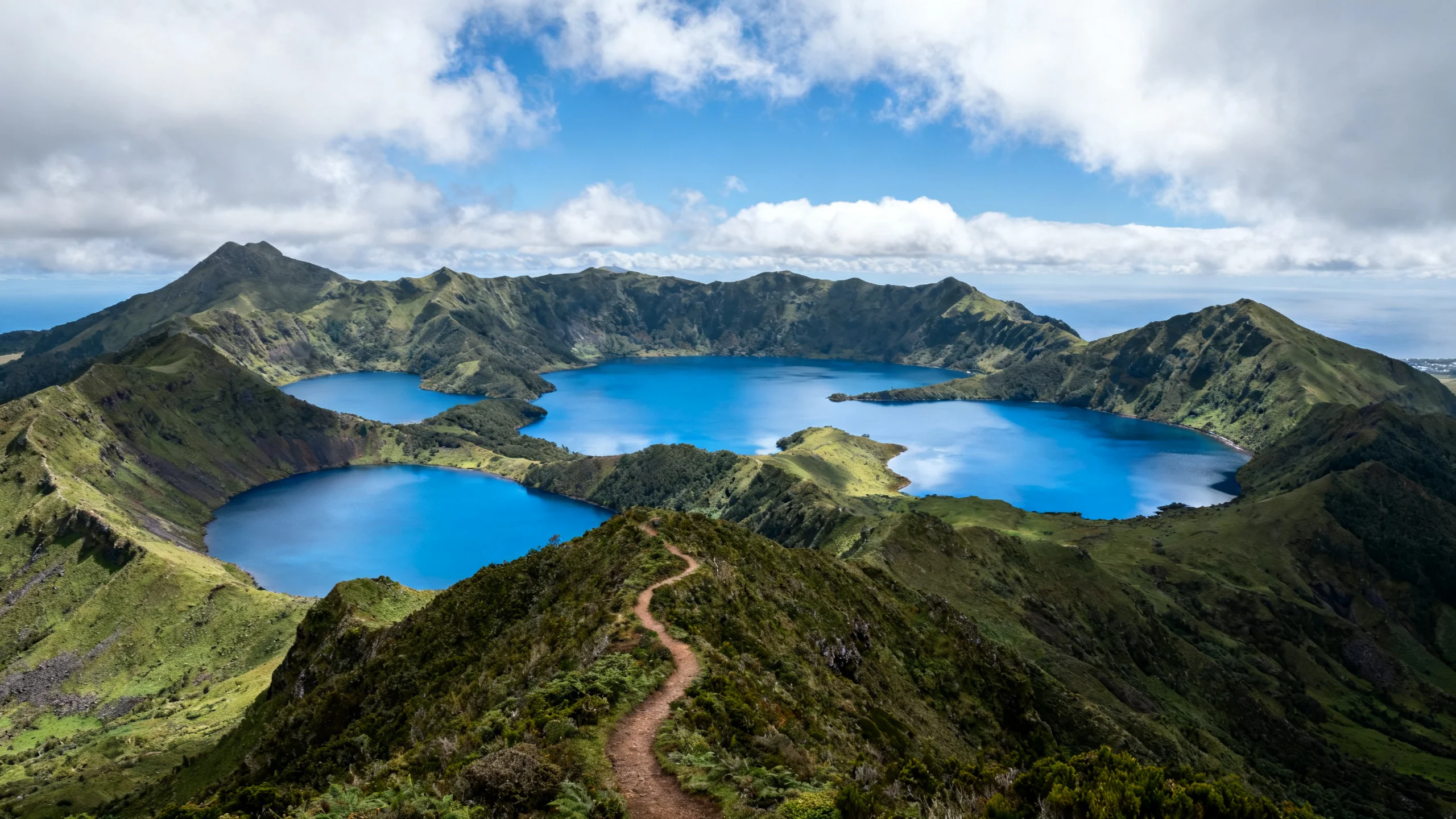
The EN3 road crosses the central plateau and passes within view of all seven named lakes. Drive slowly with stops at Miradouro Lagoa Funda (the largest and deepest), Miradouro Lagoa Comprida (the elongated one), and the small parking spot near Lagoa Branca. Best in clear weather; in cloud the plateau is fog-locked.
3. Walk the trans-island PR 1 FLO trail
The 16-kilometre central traverse from Santa Cruz to Fajã Grande, crossing the seven-lakes plateau. Allow 6 to 8 hours. The most strenuous walk on the island. A shuttle service from Santa Cruz makes the logistics workable; book through the tourist office or your accommodation.
4. Rocha dos Bordões at sunset
Vertical basalt columns 30 metres tall, the result of slow cooling of a thick basalt lava flow. The columns line the cliff face like organ pipes. West-facing, so sunset is the photographic moment. 15 minutes' drive from Lajes das Flores or 30 minutes from Santa Cruz.
5. Fajã Grande village and beach
The small village on the south-west coast with the island's only proper beach (black pebbles, swimmable in summer), a small natural pool cut into the lava rock, and the access to the Poço do Bacalhau waterfall walk. Lunch at one of the village restaurants.
6. The westernmost point of Europe
Ponta do Albernaz lighthouse, a 200-metre cliff on the north-west tip of the island, marks the westernmost permanently inhabited land of Europe. Access via the EN3 to Cedros village, then a 1-kilometre footpath. The North American tectonic plate begins immediately under water here.
7. Ferry to Corvo
The Atlanticoline ferry from Lajes das Flores reaches Vila do Corvo in 30 minutes, several daily sailings in summer, €15 one way. Corvo (the smaller sister island, 17 km²) can be walked end to end in a few hours; the ferry day trip is a complete Corvo experience. See the Corvo guide for what to do on the other side.
8. Cory's shearwater colonies
The cliffs along the west coast host one of the densest Cory's shearwater (cagarra) breeding colonies in the Azores. Adults return at dusk from June to October with their eerie wailing call. Best heard from the cliffs above Fajã Grande or near the Rocha dos Bordões at twilight.
9. Santa Cruz das Flores walking circuit
The capital is small (1,800 inhabitants) and walkable in a slow hour. The main square, the Igreja Matriz, the small Museu das Flores (€3 entry, ethnographic collection), the seafront promenade, the harbour with its small fishing boats. Best done on Day 1 to orient yourself.